Tanks
made from HDPE and PP in diameters up to DN/ID 5000 mm
KRAH Tanks and Apparatus
KRAH storage and process tanks have been successfully used for decades around the globe, either as vertical or horizontal installations. The tanks use shafts that are homogenously, helically extruded with KRAH Technology in High Density Polyethylene (HDPE) or Polypropylene (PP), the most cost-efficient method for the manufacturing of large diameter tanks. KRAH have the production facility located in Rosalyn Industrial estate, in Sultanate of Oman manufactures the Tanks for various applications.
Due to the excellent material properties of the HDPE or PP material, the tanks are perfectly suitable to handle aggressive liquids like acids, lye’s and also sensitive materials like food. With the KRAH production line either a solid wall or profiled structural shafts are helically extruded cylinders can be produced in all diameters up to DN/ID 5000 mm and a length of up to 7000 mm.
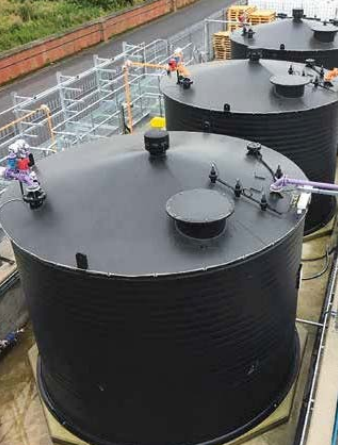
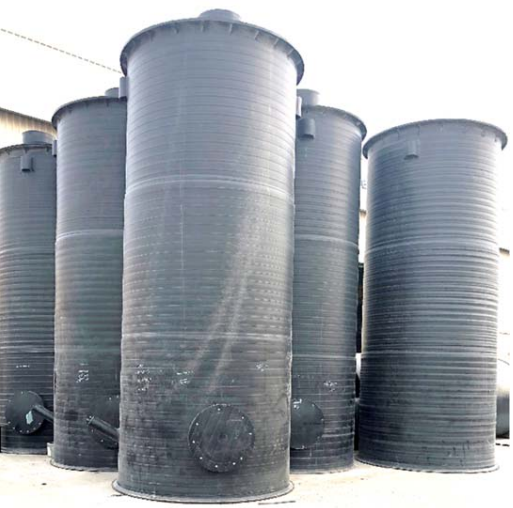
Presently KRAH manufactures the shafts or cylinders for the tank up to DN/ID 3000 mm and a length of 6000 mm. Rectangular tanks are also manufactured using the solid wall sheets, which are welded according to the international standa The cylinders can be made from different thermoplastic materials like PE 80, PE 100, different PP grades and even composite materials. Also, a profiled wall structure can be produced to increase the stiffness for horizontal tanks or to provide for example a double wall system with leakage control for chemical tanks.
Being robust in design and light in weight, easy handling, makes the installation of the tank is possible in very short time. KRAH tanks are always a smart solution for all kinds of storing.
General Design
KRAH tanks are tailormade large-volume tanks with a capacity of 1 m³ to more than 200 m³ and made from thermoplastic material like Polyethylene or Polypropylene. The tanks are designed to withstand hydrostatic pressure, considering all boundary conditions and load-cases. The static design of the tanks is mainly according to the international accepted standards DVS2205 and EN12573 or any other specific application guidelines
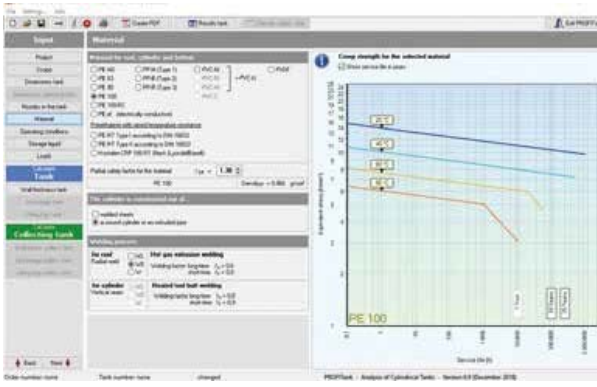
To facilitate the calculation, KRAH uses a special software program “PROFITank”, where all load cases and seismic proofs can be done. The tank wall thickness is designed according to the static requirements and due to the helical extrusion technology of KRAH, the tanks wall is completely monolithic and homogeneous. Typical dimensions and tank volumes are mentioned in the table below.
Capacity of Cylindrical Tanks in m/3
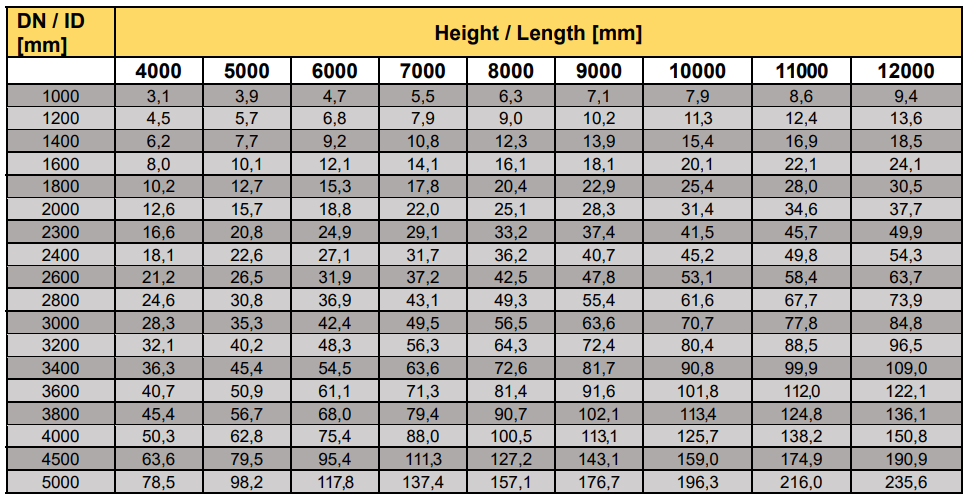
The main sizes in the range of 1000mm up to 5000 mm are mentioned above. The range of wall thicknesses can vary from minimum 5 mm to maximum 250 mm.
Applications
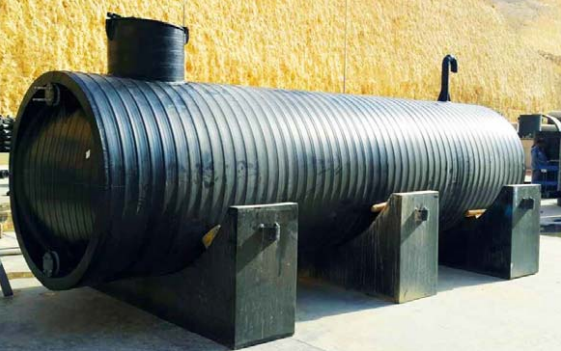
- Chemical storage and
- process tanks
- Process tanks
- Scrubber
- Process tanks
- CO2 Stripper
- Tanks for water treatment
- Silos for agriculture
- Silos for food industry
- Biogas plants / composting plants
- Fodder storage
- Storage tanks for textile industry
- Drinking water tanks / reservoirs Overflow
Production Technology
KRAH Technology to is used manufacture large diameter cylindric tanks with the helical extrusion technology, which gives a reliable, safe solution with high quality in its construction. The combination of the transverse movement of the extrusion head along with the rotational movement of the mould forms the helical winding of the molten material. The material being molten the jointing between the layers while forming the helix is
homogeneous. The manufacturing method involve the helical extrusion on a mould or mandrel, thereby a seamless cylindrical shaft is produced, no frozen stress in the tank wall. The production technology allows to produce the tanks in several layers, which can have different properties. The various components of the tank are assembled and joined together by extrusion welding.
In vertical tanks there is a reinforcing strip in the base cylindrical shells joint area to ensure the water tightness of that joint. In horizontal and buried tanks the lateral bases are reinforced using brackets of the same material. The materials used to manufacture tanks are PP and HDPE with excellent corrosion resistant properties, being chemically inert to most products.
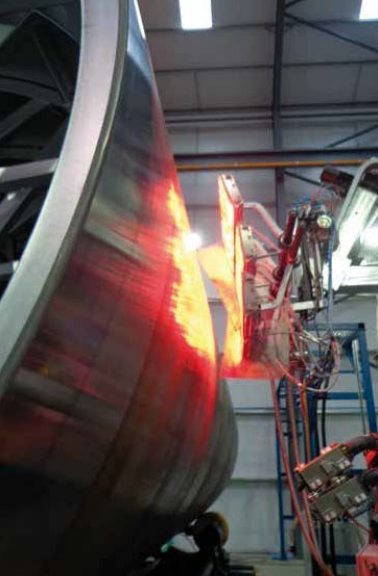
The KRAH Production Technology at a Glance
- Stepped wall thickness or varying wall thickness in a shell can be produced according to hydrostatic load.
- Lightweight profile sections facilitate obtaining high inertia suitable for use in vacuum tested equipment or
in horizontal and buried tanks. - The technology allows the construction of double
- walled cylindrical shells which are fully monolithic (a single part)
- The shells can be produced with inner layer of different colours to improve visibility inside the tank or to add an internal or external cladding with electro- conductive material.
- The bases are manufactured from plates of the same material as the cylindrical shells.
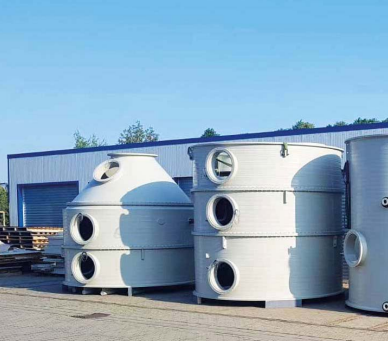
- Stepped wall thickness or varying wall thickness in a shell can be produced according to hydrostatic load.
- Lightweight profile sections facilitate obtaining high inertia suitable for use in vacuum tested equipment or in horizontal and buried tanks.
- The technology allows the construction of double- walled cylindrical shells which are fully monolithic (a single part).
- The shells can be produced with inner layer of different colours to improve visibility inside the tank or to add an internal cladding with electro- conductive material.
- The bases are manufactured from plates of the same material as the cylindrical shells.
When
Monday-Friday
07:30 – 16:00
How
+971 2 6423 999
+971 50 555 7777
Where
MQ Tower, 543 Muroor Road, Abu Dhabi, UAE